
Hardwood floors add timeless elegance and significant value to a home. However, years of foot traffic, pet scratches, and moving furniture eventually take a toll on the wood’s surface. When your floors begin to show signs of aging, you face a critical decision: refinishing vs replacing hardwood floors. Choosing the right path impacts your home’s aesthetics, your renovation timeline, and your project budget.
Evaluating the current condition of your flooring helps determine the most practical and cost-effective solution. Both options offer distinct benefits, but structural integrity and the type of wood installed dictate which choice is actually possible for your space.
Assessing the Condition of Your Hardwood Floors
Before deciding whether to sand down your floors or tear them out completely, you must analyze the extent of the damage. Superficial wear requires a completely different approach than deep structural degradation.
When Refinishing Is the Best Option
Refinishing is ideal when the damage is strictly cosmetic and confined to the top layer of the wood. If your floors suffer from light surface scratches, dullness, minor stains, or localized discoloration, professional sanding and resealing can restore their original luster.
To determine if your floors can handle another sanding cycle, look at the thickness of the wood planks. Solid hardwood can typically be refinished four to six times throughout its lifespan. Engineered hardwood, which features a real wood veneer over a plywood core, can usually only be refinished once or twice, depending on the thickness of the top wear layer. You can check the remaining thickness by removing a floor register or checking the edges near a transition strip. If the wood is at least 1/8-inch thick above the tongue and groove, it can safely undergo the sanding process.
When Replacement Is Inevitable
Sometimes, the damage goes too deep for a simple sand-and-refinish job to fix. Replacement becomes necessary when the structural integrity of the flooring is compromised. Look for clear warning signs like severe water damage, warped or buckled planks, structural sagging, or widespread termite damage.
Additionally, if previous homeowners have already sanded the floors down to the tongue and groove, the wood will be too thin to endure another sanding cycle. Attempting to sand thin planks will expose nails and cause the wood to splinter. If you notice structural movement, large gaps between planks that persist through seasonal changes, or extensive deep pet stains that have penetrated entirely through the wood fibers, investing in brand-new flooring is the safest and most permanent solution.
Comparing Costs, Timeline, and Longevity
Understanding the practical differences in budget, time investment, and long-term performance helps clarify which choice aligns best with your renovation goals.
Project Costs and ROI
From a financial standpoint, refinishing is almost always the more budget-friendly choice. Refinishing eliminates the need to purchase new raw materials and significantly reduces labor expenses, as there is no demolition or disposal involved. According to data from the National Association of Realtors, refinishing existing hardwood floors yields one of the highest returns on investment (ROI) among interior remodeling projects, often recovering over 100% of the project cost upon resale. Replacing a floor involves purchasing new planks, paying for the tear-out and disposal of old materials, and paying for subfloor preparation and new installation, making it substantially more expensive.
Timeline and Home Disruption
The installation process looks vastly different for both options. Refinishing a floor generally takes three to five days, depending on the square footage and the type of polyurethane sealer used. Oil-based finishes require longer drying times between coats, while water-based finishes dry much faster but may require more coats. During this time, homeowners must completely clear the rooms and avoid walking on the floors.
Replacing a hardwood floor is a multi-step timeline that can take over a week. The new wood planks must first acclimate to your home’s humidity levels for several days before installation to prevent warping, a standard practice recommended by the National Wood Flooring Association. Following acclimation, the demolition, subfloor repair, and new installation add several more days of heavy construction noise and dust to your schedule.
Lifespan and Durability
Solid hardwood floors are incredibly durable, often lasting up to 100 years when properly maintained. Refinishing your floors resets the clock on surface wear, giving you another 10 to 15 years of beauty before another refresh is needed. Replacement provides a completely fresh slate with modern locking mechanisms or superior factory-applied finishes that offer enhanced scratch resistance. If you choose to replace old solid wood with high-quality modern alternatives, you secure another century of floor longevity for your property.
Aesthetic and Design Considerations
Beyond the structural and financial aspects, your decision also impacts the interior design flexibility of your home.
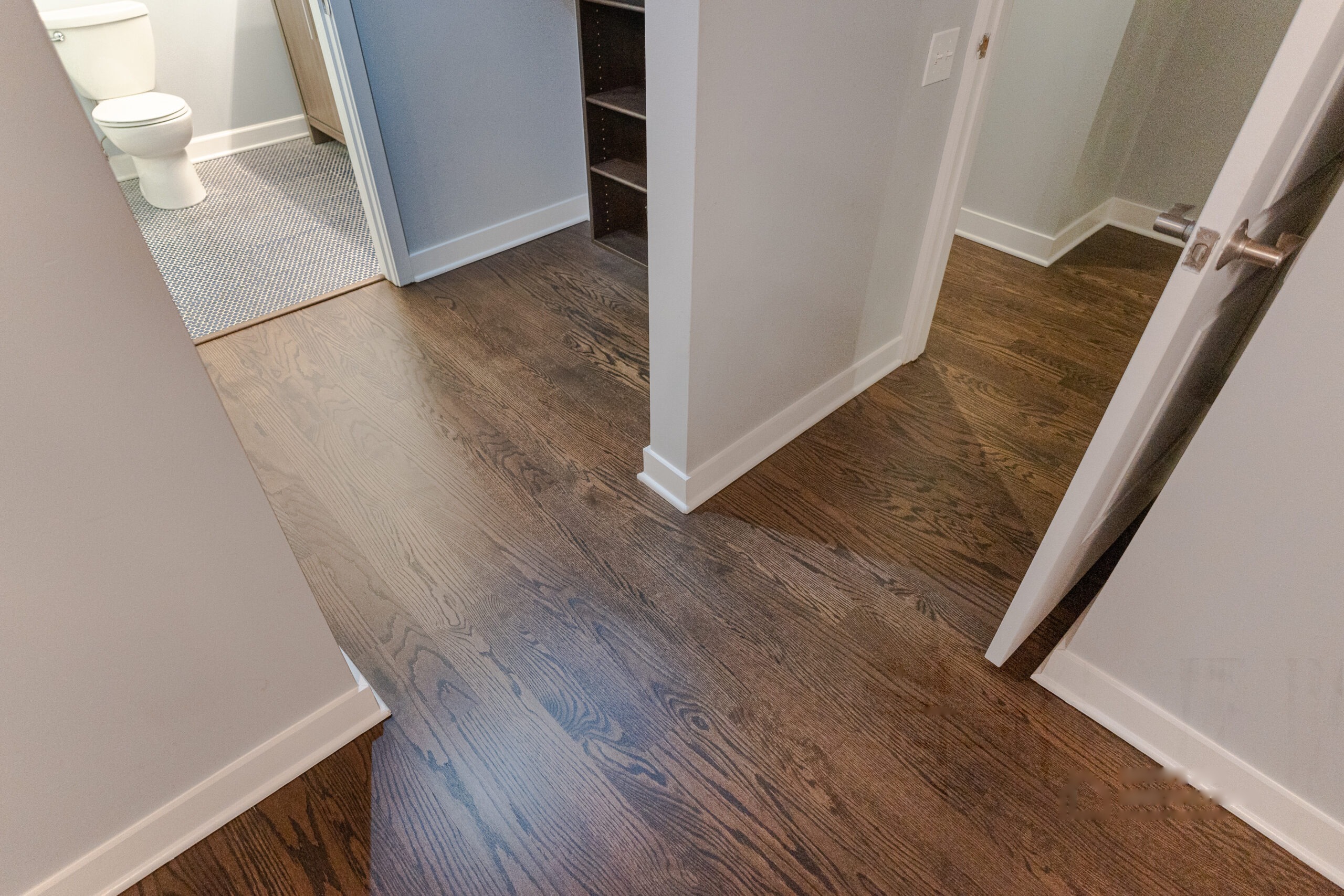
If you choose to refinish your floors, you retain the ability to change the stain color. You can transition from a dark espresso tone to a light, natural oak aesthetic to match modern interior trends. However, refinishing limits you to the existing layout, plank width, and wood species.
Replacement opens up unlimited design possibilities. If your home currently features narrow 2-inch builder-grade planks and you prefer a modern look, replacing the floor allows you to upgrade to trendy wide-plank European oak. Replacement also allows you to change the direction of the flooring to improve the visual flow of your home, or switch to a distinct pattern like herringbone or chevron. Furthermore, replacing the floor gives you the opportunity to address subfloor imperfections, eliminating annoying squeaks and creating a perfectly level walking surface.
Choosing the Better Path for Your Home
To make the final decision, assess the age of your property, the severity of the floor damage, and your long-term design goals. If your budget is a primary concern and your floors are structurally sound, refinishing is the smarter, more sustainable choice that preserves the character of your home. If you want to completely reconfigure your home’s layout, change the plank width, or fix severe subfloor damage, a full replacement is the superior route.
For homeowners managing older properties, it is also important to consider historical preservation and environmental safety. The U.S. Environmental Protection Agency notes that homes built before 1978 may contain lead-based paint or older hazardous varnishes on wood surfaces, which requires specialized dust containment protocols during any sanding or demolition work. Consulting with a professional contractor ensures these safety measures are handled correctly.
Transform Your Floors with Revive 360 Renovation
Whether your home requires a meticulous floor sanding or a complete structural flooring overhaul, our experienced team delivers flawless craftsmanship tailored to your space. The flooring specialists at Revive 360 Renovation can inspect the thickness of your wood wear layer, evaluate your subfloor integrity, and help you select the most cost-effective solution to elevate your home’s value. Contact us today through our official website at Revive Renovations to schedule an in-home consultation and give your floors the beautiful, lasting upgrade they deserve.