
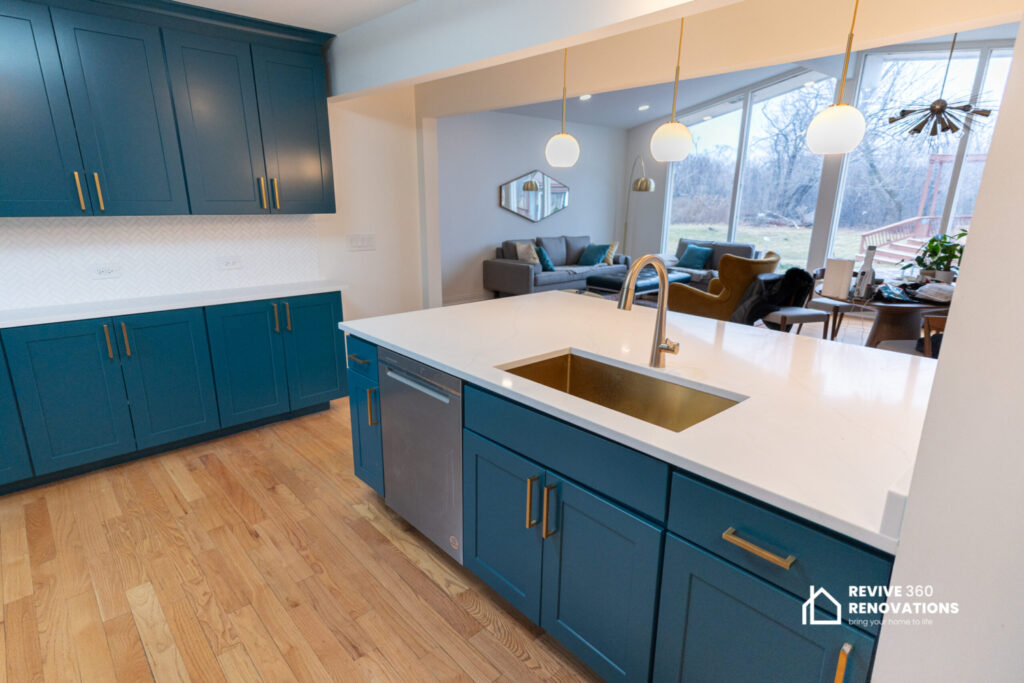
A kitchen that feels dim no matter the hour is a common frustration in Chicago’s classic bungalows and two-flats, where small windows and boxed-in layouts were once the norm. Natural light does more than make a room look bigger — it changes how food looks, how paint reads, and how much time your family wants to spend at the counter. Most kitchens can gain dramatically more daylight without a full teardown, once you know which structural moves and finish changes actually move the needle. This guide covers the layout and window changes worth considering, the finishes and lighting that stretch existing light, window treatments that preserve brightness, and the mistakes that keep a remodel darker than it should be.
Key Takeaways
- Layout drives daylight more than window size: Opening a wall between the kitchen and an adjacent room often does more for brightness than a bigger window.
- Reflective surfaces multiply the light you have: Glossy countertops, light backsplash tile, and glass or mirrored elements bounce daylight deeper into the room.
- Structural changes need a plan for permits and support: Any wall removal or window enlargement should be evaluated for load-bearing status first.
- Layered lighting extends the “daylight” feeling after sunset: Under-cabinet, ambient, and task lighting keep a bright kitchen from going flat after dark.
- Window treatments should filter, not block: Sheer or top-down shades preserve privacy without stacking heavy fabric across the glass.
- Dark finishes and low valances are the top light-killers: Deep cabinet colors and treatments overhanging windows are the most common reasons a remodel still feels dim.
Why Natural Light Matters More in the Kitchen Than Anywhere Else
Kitchens ask more of their lighting than almost any other room in the house. You need it to judge whether food is cooked through, whether produce looks fresh, and whether a tile sample truly matches — tasks warm-toned artificial light can distort. Per the U.S. Department of Energy’s guidance on daylighting, well-placed natural light can also meaningfully cut a home’s daytime electricity use.
There’s also a resale angle: buyers consistently respond to bright, open kitchens, and a dark, closed-off one is one of the fastest ways a kitchen reads as dated, regardless of how new the appliances are. A kitchen’s perceived value is tied as closely to how it feels to stand in as to what brands of appliances it contains.
Start by Reading Your Kitchen’s Existing Light
Before choosing a fix, it helps to understand where your kitchen’s light problem comes from. Some kitchens simply don’t have enough glass — a single small window over the sink was often the only source in an older Chicago home. Others have decent window area but lose most of the benefit because a wall, upper cabinets, or a neighboring room blocks light from traveling far past the glass. Still others get plenty of light early in the day but go flat by afternoon, or lose most of it to heavy drapery and dark finishes.
Spend a few days watching your kitchen at different hours before committing to a plan. Note which walls receive direct sun, which corners stay shadowed at midday, and whether the room lacks light entirely or simply fails to spread it. That diagnosis determines whether your money is best spent on a structural change, a finish swap, or both.
Structural Changes That Let in More Daylight
When a kitchen is dark because of its footprint rather than its finishes, structural changes deliver the most dramatic results.
Removing or Opening Walls for an Open-Concept Layout
Many older Chicago homes wall the kitchen off from the dining or living room, a layout that made sense when kitchens were purely utilitarian but now blocks light from adjacent windows. Taking down a full wall, or replacing it with a wide opening or half-wall, lets daylight and sightlines travel freely between rooms. This is one of the most requested changes in our open concept kitchen remodeling projects, often paired with a broader kitchen layout redesign so the new footprint fits the household.
Enlarging or Adding Window Openings
Widening an existing window, lowering its sill, or adding a second window on an underused wall can bring meaningfully more light in without touching the floor plan. It’s worth evaluating alongside layout changes, since a new counter run or island may open a wall that previously had cabinetry blocking it.
Skylights and Solar Tubes
For kitchens with no usable exterior wall, a skylight or solar tube introduces overhead daylight a vertical window can’t match. Solar tubes suit smaller budgets, routing daylight through a reflective tube from roof to ceiling without the framing a skylight requires.
Non-Structural Design Choices That Amplify Existing Light
Not every kitchen needs demolition to feel brighter. Finish choices alone can noticeably change how much available daylight gets used.
Paint Color and Sheen
Wall and cabinet color has an outsized effect on how bright a kitchen feels, because color determines how much light gets absorbed versus reflected. Light, warm neutrals bounce daylight around a room, while a satin or eggshell sheen reflects more than a flat matte finish. Swapping dark or saturated wall colors for a light palette is one of the highest-return, lowest-cost changes available to a dim kitchen. Our interior painting services page covers sheen and color choices suited to kitchens.
Reflective Countertops and Backsplashes
Polished quartz, light marble, and glossy tile all reflect daylight back into the room instead of absorbing it the way matte, dark stone does. A light backsplash paired with a reflective countertop visibly brightens the zones where light matters most for food prep. Our kitchen countertops and backsplash page covers material options that reflect light well.
Cabinet Finish and Hardware
Cabinet color affects brightness almost as much as wall paint, particularly near window height. Light or two-tone cabinetry, glass-front doors, and polished hardware help a kitchen feel more open than a run of dark, closed cabinetry.
Layered and Under-Cabinet Lighting That Extends the Daylight Effect
Daylight solves the problem for part of the day, but a well-lit kitchen also needs a plan for before sunrise and after sunset — one that continues the feel of natural light rather than replacing it with something harsher. Under-cabinet lighting is one of the most effective additions, illuminating countertops without the shadows overhead fixtures cast. Layering that with ambient ceiling light and a few accent fixtures over an island or sink recreates the depth daylight creates naturally.
Choosing warmer 2700K–3000K LED bulbs for ambient fixtures, paired with slightly cooler task lighting under cabinets, keeps the kitchen feeling bright without feeling clinical. Dimmable fixtures are worth the small added cost, letting you match artificial light to whatever daylight remains.
Choosing Window Treatments That Don’t Block the Light
It’s common to spend real money opening up a kitchen’s windows and then quietly undo the benefit with heavy curtains or bulky valances. The right treatment manages privacy and glare without stacking fabric across the glass. Sheer curtains diffuse harsh sun while still letting most light through, working well over a sink facing a neighboring yard. Top-down/bottom-up cellular shades are another strong option, covering only the lower half of a window for privacy.
Where privacy isn’t a concern, consider leaving a window uncovered, or dressing it simply with a café curtain on the lower sash only. The single most effective window-treatment decision in a kitchen is often simply choosing less fabric, not a different fabric.
Cost and Permit Considerations for Structural Light Upgrades
Structural changes bring more light, but also more planning. Removing a wall requires determining whether it’s load-bearing; if so, the project needs a structural engineer’s input and a permit-approved beam. In Chicago and most surrounding municipalities, wall removal, window enlargement, and skylight installation all typically require permits — not a step to skip, since unpermitted structural work can create problems at resale.
Budget-wise, non-structural changes like paint, countertops, and lighting are the least expensive way to gain brightness. Window enlargement and skylights sit in the middle, involving exterior work and code compliance but not major structural revision. Full wall removal is typically the largest investment, both for the engineering involved and because homeowners often address surrounding cabinetry at the same time.
Common Mistakes That Quietly Keep Kitchens Dark
Even well-planned remodels sometimes end up darker than intended. The most frequent misstep is choosing dark cabinet or wall finishes in a kitchen without much natural light to begin with — a deep navy or charcoal palette can look stunning in photos but reads as heavy in a room that depends on daylight. Another common issue is installing upper cabinets or a decorative valance over the top of a window, physically blocking the glass.
Over-treating windows is another culprit: layered curtains, valances, and blinds stacked for a “finished” look can block more light than the original window did alone. Finally, many kitchens rely entirely on a single central ceiling fixture, leaving the space unevenly lit well before sundown. Reviewing cabinet layout, finishes, and window treatments together — rather than choosing each in isolation — is the surest way to avoid undoing a light-focused remodel by accident.
Frequently Asked Questions
How much does it cost to add more natural light to a kitchen?
Paint, countertop, and lighting updates can often fit a modest budget, while enlarging windows or adding a skylight costs more due to exterior work, and removing a load-bearing wall is typically the biggest investment.
Do I need a permit to remove a wall for more light?
In Chicago and most surrounding municipalities, yes — interior wall removal generally requires a permit, especially if the wall is load-bearing and needs a replacement beam. A licensed contractor can determine your wall’s status and handle permitting.
What’s the cheapest way to make a dark kitchen feel brighter?
Repainting walls and cabinets in a lighter, warm neutral with a satin or eggshell sheen is typically the most affordable high-impact change. Swapping heavy window treatments for sheer curtains is a close second.
Will a skylight make my kitchen too hot in summer?
Modern skylights with low-E glazing and proper flashing manage solar heat gain well, so overheating is much less of a concern than with older models.
Should upper cabinets ever be removed to let in more light?
Removing upper cabinets near a window, or swapping solid doors for glass-front ones, is a common way to stop cabinetry from blocking window light. It pairs well with open shelving or a lighter palette.
What’s the best window treatment for a kitchen that needs privacy but still wants light?
Top-down/bottom-up cellular shades work well, covering only the lower portion of the window for privacy while leaving the top open to daylight. Sheer curtains are a good choice where privacy needs are lighter.
Can paint color really make a difference in how bright a kitchen feels?
Yes — color and sheen directly affect how much light a surface reflects versus absorbs. Light, warm neutrals in a satin or eggshell finish noticeably brighten a room compared to dark or flat-finished surfaces.
Bringing more daylight into a kitchen is rarely about one single change — it’s the right layout, finishes, and lighting plan working together. If your kitchen feels darker than it should, the team at Revive 360 Renovations can walk through your space and help you decide which changes make the biggest difference. Reach out to start the conversation about a brighter kitchen.