
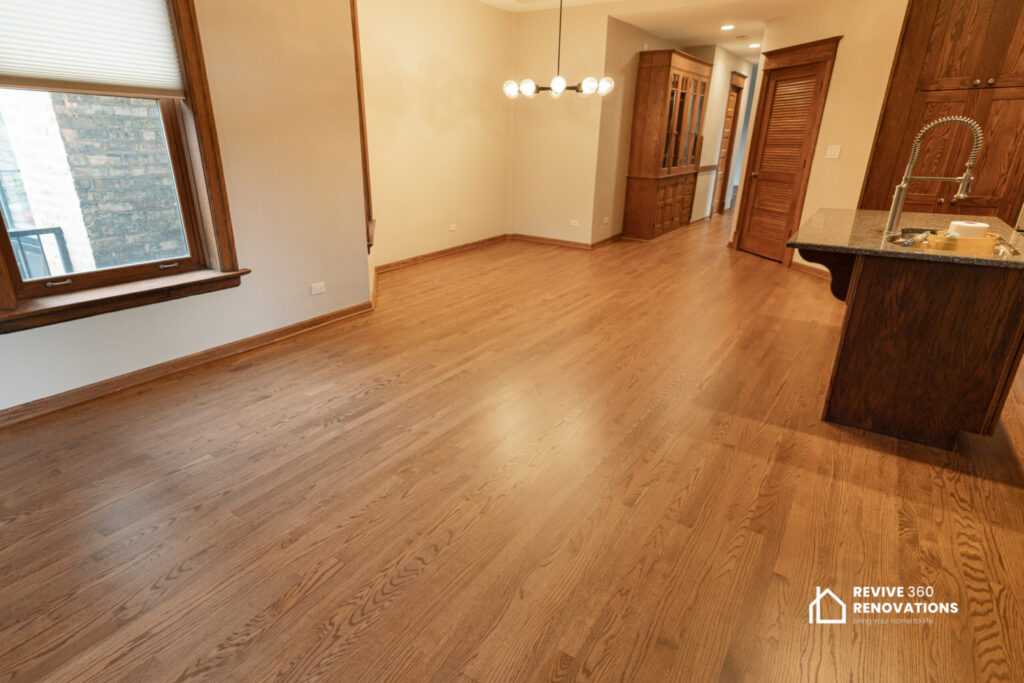
If you share your home with a dog or cat, your floors work harder than your furniture or appliances. Claws scrape at finishes, accidents seep into seams, and muddy paws track in grit that acts like sandpaper. Choosing the wrong material means refinishing or replacing floors years ahead of schedule, while the right one shrugs off years of four-legged chaos. The best flooring for pets balances scratch resistance, water tolerance, and safe traction — no single “pet-proof” material exists, but several come close. This guide compares how popular flooring types hold up to claws, accidents, and traffic, what they cost, and which materials to avoid in pet households.
Key Takeaways
- Luxury vinyl plank leads the pack: It resists scratches, shrugs off moisture, and installs with a texture that gives pets confident footing.
- Solid hardwood is the riskiest choice: Softer wood species dent and scratch easily, and refinishing costs add up over a pet’s lifetime.
- Tile wins on odor and accident cleanup: Its non-porous surface won’t trap urine odors the way wood or laminate can if accidents go unnoticed.
- Traction matters as much as durability: Glossy, hard surfaces can cause slipping injuries in older pets or large, active breeds.
- Cost per square foot varies widely: Budget-friendly laminate and LVP start around $2–$5 installed, while solid hardwood and natural stone tile run $8–$15 or more.
- Professional installation protects your warranty: Seams, transitions, and subfloor prep matter more in pet households, where moisture and pressure points are constant.
What Makes Flooring Truly Pet-Friendly
Not every “durable” floor is good for pets. The real test comes down to four factors: scratch resistance, moisture resistance to handle accidents without warping, traction to keep pets from sliding on smooth surfaces, and odor resistance so trapped moisture doesn’t become a lingering smell. A material can excel in one category and fail in another — glazed porcelain tile resists scratches beautifully but can be slippery for an arthritic senior dog. Evaluating flooring for a pet household means weighing all four factors together, not just picking whichever material looks toughest. A household with two cats has very different needs than one with a 90-pound Labrador that sprints through the kitchen daily.
Luxury Vinyl Plank (LVP): The Top Choice for Pet Owners
Luxury vinyl plank is the default recommendation for pet owners. It’s built with a rigid or flexible core topped by a printed design layer and a wear layer that resists scuffs, scratches, and stains far better than natural materials at a similar price.
Scratch and Moisture Resistance
LVP’s wear layer, rated in mils, determines how well it stands up to claws — a 12 to 20 mil layer handles active dogs without visible scratching for years. Because the planks are 100% waterproof at the core, accidents and muddy paws simply wipe away without the swelling or staining that plagues wood-look alternatives. This is why luxury vinyl plank installation has become the most requested flooring upgrade among Chicago pet owners replacing worn carpet or damaged hardwood.
Traction and Safety
Many LVP products now feature textured, low-sheen finishes that mimic hand-scraped wood grain, giving pets far better grip than a glossy surface — important for older dogs with joint issues and larger breeds that build up speed indoors, where a slick floor raises the risk of slipped hips. LVP typically runs $3 to $7 per square foot installed, a strong middle ground between budget laminate and premium hardwood.
Laminate Flooring: A Budget-Friendly Contender
Laminate flooring uses a photographic layer under a clear wear coating over a compressed wood-fiber core, and modern versions have closed the durability gap with vinyl. Higher-end laminates carry AC4 or AC5 abrasion ratings that hold up well to nail traffic and everyday scuffing.
The tradeoff is moisture. Even water-resistant laminates aren’t fully waterproof — the fiberboard core can swell if liquid sits at a seam too long, making laminate better suited to dry-footed cats than dogs prone to accidents. Homeowners considering laminate flooring installation should prioritize reinforced, water-resistant cores and tight click-lock seams, and wipe up spills quickly. Laminate installed typically costs $2 to $5 per square foot — an affordable route to a wood-look floor that handles moderate pet activity.
Tile Flooring: Best for Accidents and Odor Control
Porcelain and ceramic tile are essentially immune to scratching and completely impervious to moisture, making them the gold standard for odor control in pet households. Unlike wood or laminate, tile won’t absorb urine into a porous core, so lingering odors are unlikely if an accident is cleaned promptly. This is why tile flooring services are popular for mudrooms, entryways, and kitchens where pets spend the most time.
The two considerations are grout lines and traction. Grout is porous and can trap odor if not sealed regularly, so choose a stain-resistant grout and reseal it periodically. Glazed tile can also be slippery on wet paws — matte or textured finishes, plus larger-format tiles that reduce grout lines, are smarter for active dogs. Tile installed generally runs $6 to $12 per square foot depending on material and pattern, with natural stone pushing higher.
Engineered Hardwood vs. Solid Hardwood: What Pet Owners Should Know
Hardwood’s warmth and resale appeal make it tempting, but pet owners should understand the differences between engineered and solid options before committing.
Engineered Hardwood
Engineered hardwood consists of a real wood veneer bonded over layers of plywood, making it more dimensionally stable through humidity swings than solid wood. It still scratches from claws, but harder species like hickory or white oak hold up better than softer ones, and a satin or matte finish hides fine scratches better than high-gloss. Routine hardwood floor maintenance — recoating the finish every few years instead of waiting for full refinishing — keeps engineered floors looking fresh in an active pet household.
Solid Hardwood
Solid hardwood is milled from a single piece of wood, and while it can be sanded and refinished multiple times, it’s also the most vulnerable to pet-related wear. Softer species like pine or cherry dent and scratch easily, and moisture from accidents can cause cupping or warping at the seams. Solid hardwood is generally the riskiest choice for large or high-energy dog households, since claw damage often forces refinishing sooner than the typical 7-to-10-year cycle. The National Wood Flooring Association notes that species and finish choice make a meaningful difference in how hardwood performs under everyday wear.
Flooring to Approach with Caution in Pet Households
Some materials that work well in pet-free homes create real headaches once animals enter the picture. Wall-to-wall carpet is the biggest offender: it absorbs odors and stains, traps dander in the fibers, and often shows matting in high-traffic pet areas within a couple of years. Soft species like pine, cherry, or Brazilian cherry dent under claws more readily than oak or maple. Bamboo, often marketed as eco-friendly and durable, can scratch more easily than expected and reacts to moisture like hardwood. None of these are automatically off the table for a cat-only household with minimal accidents, but homeowners with active dogs or multiple pets should weigh the tradeoffs before choosing them for high-traffic rooms.
Cost Comparison by Material
Budget often decides the choice once durability questions are answered, and pet-friendly upgrades don’t have to break the bank. Here’s a general range for installed costs in the Chicago area:
- Laminate: $2–$5 per square foot — budget-friendly, moderate moisture resistance
- Luxury vinyl plank: $3–$7 per square foot — excellent scratch and moisture resistance
- Engineered hardwood: $6–$11 per square foot — good durability with real wood appeal
- Ceramic/porcelain tile: $6–$12 per square foot — best for moisture and odor control
- Solid hardwood: $8–$15+ per square foot — highest refinishing costs over time
- Natural stone tile: $10–$18+ per square foot — premium look, needs regular sealing
These ranges assume standard installation over a subfloor in good condition; removing old flooring, subfloor repair, or intricate patterns can shift the total.
Installation and Maintenance Tips for Pet Households
Even the best material underperforms with poor installation or upkeep. Seams and transitions deserve extra attention in pet homes, since these are the weak points where moisture tends to collect — a professional installer will seal them properly and choose transition strips that won’t lift under paw traffic. Keeping nails trimmed reduces the drag-and-scratch pattern that dulls finishes, and washable mats at entry points and under food and water bowls catch grit and spills before they reach the floor. It’s also worth considering indoor air quality when selecting finishes and adhesives: the EPA’s guidance on indoor air quality highlights the value of low-VOC materials, since pets spend far more time close to the floor than people do. Scheduling a professional flooring consultation before demolition helps match subfloor conditions, moisture levels, and pet behavior to the right material.
Frequently Asked Questions
What is the most scratch-resistant flooring for dogs?
Luxury vinyl plank with a thick wear layer (12 mils or higher) is generally the most scratch-resistant option for active dogs, followed closely by porcelain tile. Both resist the fine scratching and dulling that claws cause on wood-based products.
Is hardwood flooring bad for dogs?
Hardwood isn’t inherently bad for dogs, but softer species and glossy finishes scratch and show wear more easily. Choosing a harder wood species, a satin finish, and keeping nails trimmed can make hardwood a workable option for calmer or smaller dogs.
Can I install pet-friendly flooring myself, or should I hire a professional?
Some click-lock LVP and laminate products are marketed as DIY-friendly, but professional installation ensures seams are properly sealed against moisture and transitions are secure — both critical in pet households, where improperly sealed seams are a common cause of water damage.
Does pet-friendly flooring cost more than standard flooring?
Not necessarily. Luxury vinyl plank and laminate, two of the top pet-friendly options, are often less expensive than solid hardwood or natural stone. The bigger consideration is long-term: a durable floor typically avoids the early refinishing or replacement costs that softer materials require.
What flooring provides the best traction for senior dogs or cats?
Textured luxury vinyl plank or matte-finish laminate generally offer the best grip for pets with mobility concerns. Glossy tile and high-gloss hardwood should be avoided or paired with area rugs and runners in high-traffic paths.
How do I get rid of pet odors trapped in flooring?
Odors usually mean moisture has penetrated a porous material like wood, laminate core, or carpet padding. In many cases the affected section needs replacing rather than just cleaning, which is why non-porous options like tile or vinyl appeal to owners prone to occasional accidents.
Is carpet ever a good option for pet owners?
Carpet can work in low-traffic areas like bedrooms for calm, house-trained pets, but it’s rarely ideal for high-traffic zones like living rooms or entryways. If carpet is preferred for comfort, a low-pile, stain-resistant style with regular professional cleaning helps manage odor and wear.
Choosing the right floor for a pet-friendly home doesn’t mean sacrificing style, and it shouldn’t mean guessing either. The team at Revive 360 Renovations has spent 16 years helping Chicago homeowners match flooring to real-life households — pets, kids, and all — and would be glad to walk through your space, budget, and pets’ habits to recommend an option that holds up. Reach out to start the conversation whenever you’re ready.