
Recent flooring work
Belden St., Lincoln Park
Oak flooring laid and finished through the kitchen, hall and living space of a two-flat.
Paulina St., Wicker Park
Treads, risers and landings rebuilt and refinished to match new floors on both levels.
A floor is only as flat as what sits under it
Almost every flooring complaint we are called out to — bouncing boards, a plank that keeps lifting, grout lines that crack in a straight line — comes back to the subfloor rather than the material on top of it.
Chicago's older two-flats and greystones were framed with joists that have moved for a century. Spans sag, old patches sit proud, and a floor that looks level across a room can be out by a quarter of an inch in three feet. Tile will telegraph that as cracked grout, laminate will click apart at the joints, and hardwood will squeak.
So we start underneath. We check deflection, find the high and low spots, and either plane them back or fill them before a single board is laid. It is the least visible part of the job and the one that decides whether the floor is still quiet in five years.
What actually moves the price
Sound plywood is quick. Rotten boards, a sagging joist or three layers of old covering all have to come out first, and that is the biggest unknown in any quote.
A straight-lay plank is the baseline. Herringbone, borders and large-format tile all take longer to set and waste more material at the edges.
Treads, risers and nosings are built one at a time. A straight flight adds real hours, and a winder or landing adds more again.
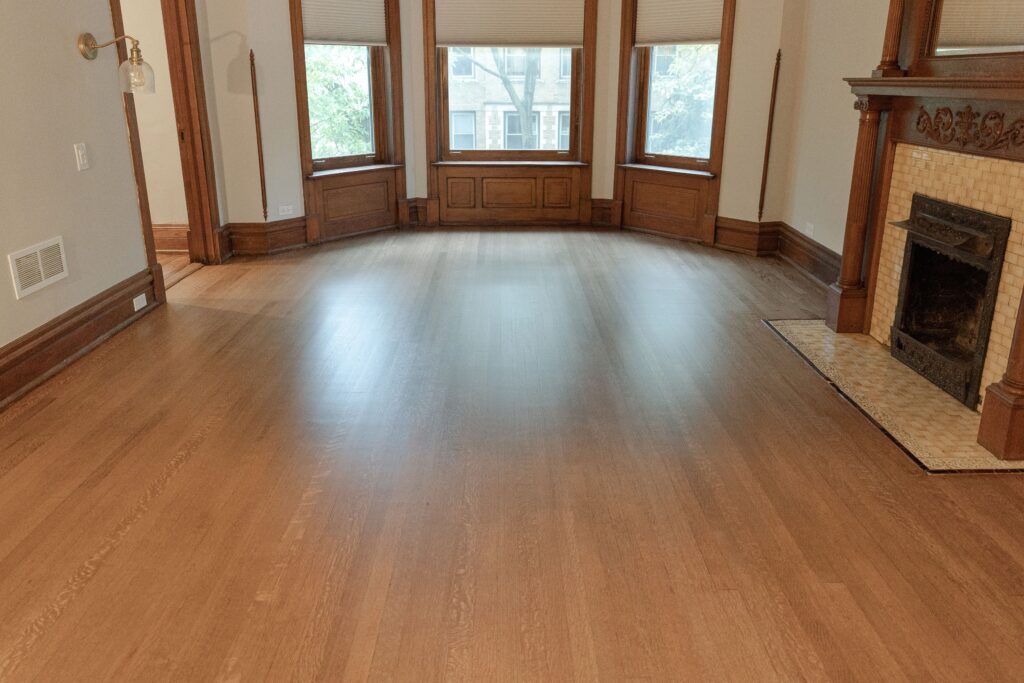
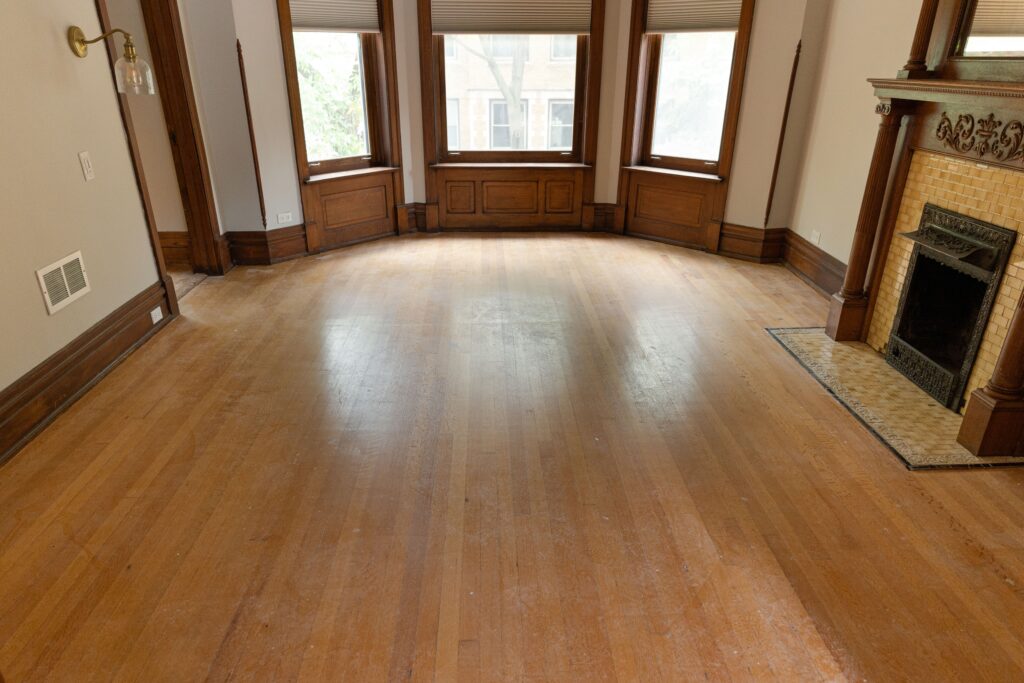
Original boards with enough thickness left can be sanded and refinished for a fraction of replacement. Once they are too thin, that option closes.
What a flooring project actually covers
Subfloor and levelling
The part nobody sees, and the part that decides whether the finished floor is quiet.
- Deflection checked — bouncing spans found before anything is laid over them.
- Rot and water damage cut out and the decking replaced.
- Self-levelling compound or planing to bring the slab or deck flat.
- Squeaks fixed from above where the ceiling below has to stay intact.
Hardwood
New boards, or the original floor brought back rather than thrown away.
- Repair — damaged boards woven in so the patch does not read as a patch.
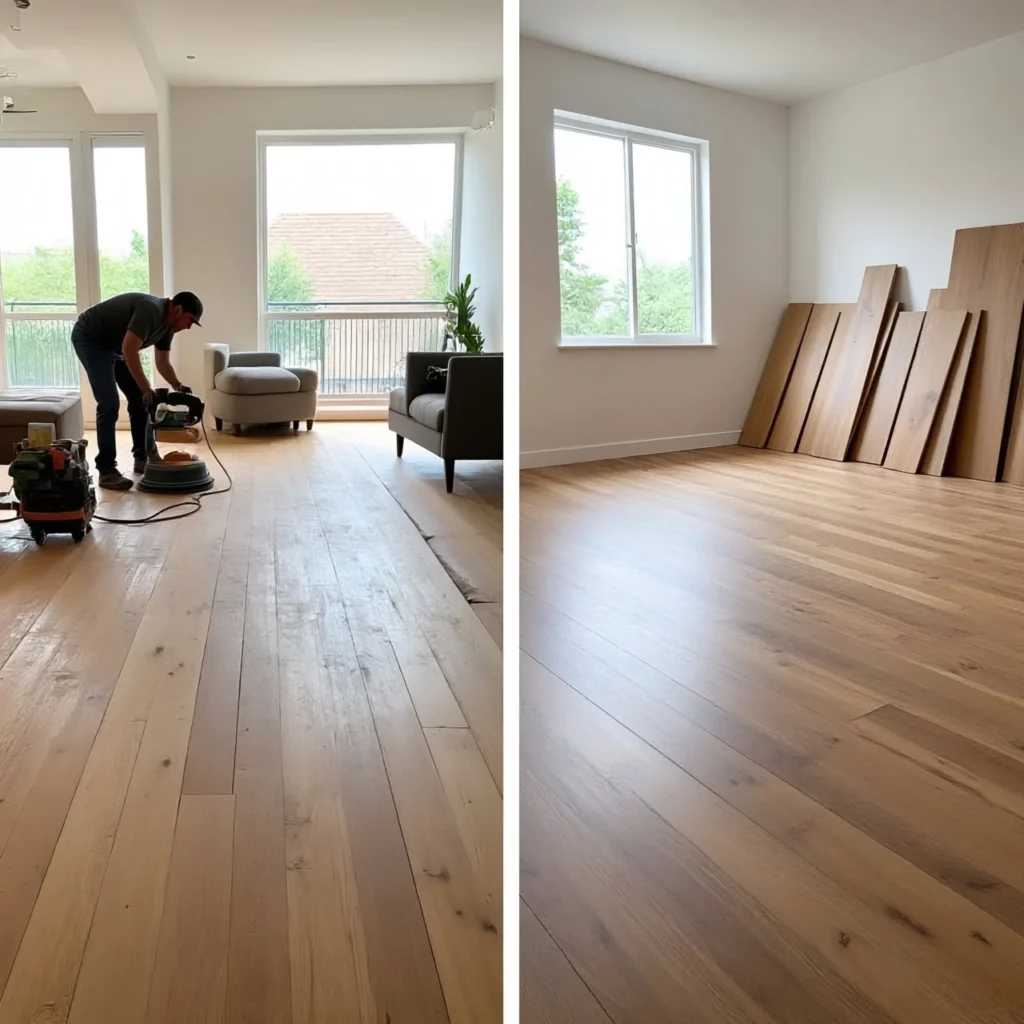
- Refinishing with vacuum-extracted sanders, then stain and seal.
- Maintenance coats that renew the finish without a full sand.
- Stairs matched to the floor they run between.
Laminate and luxury vinyl
Where budget, pets or a below-grade room rule hardwood out.
- Luxury vinyl plank — fully waterproof, and the usual answer for basements.
- Laminate for hard-wearing rooms where the budget is fixed.
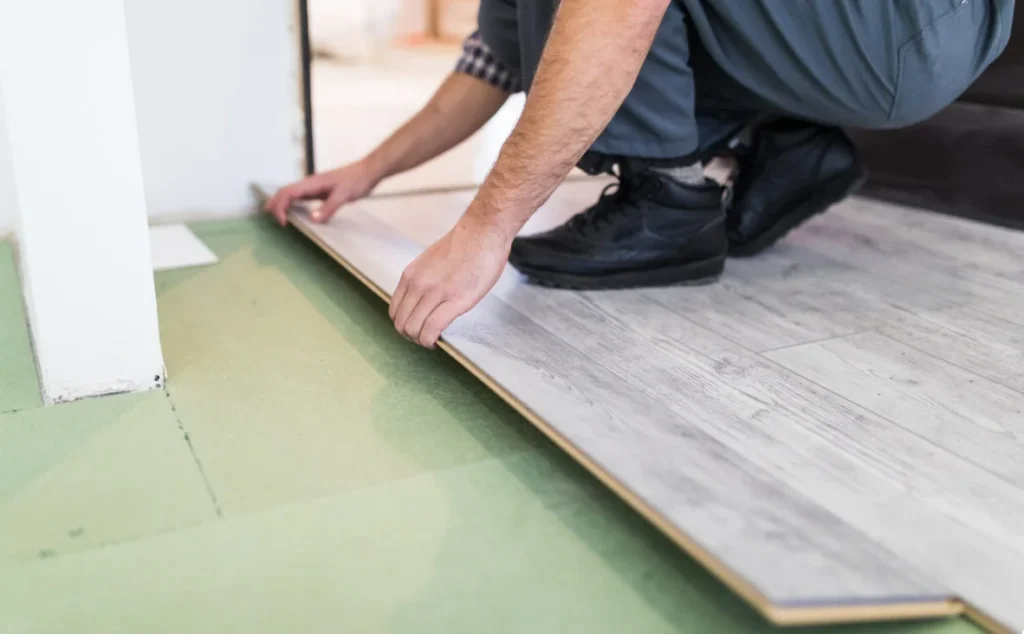
- Underlay specified to the room, not whatever came with the boxes.
- Expansion gaps set properly so the floor does not peak in summer.
Tile
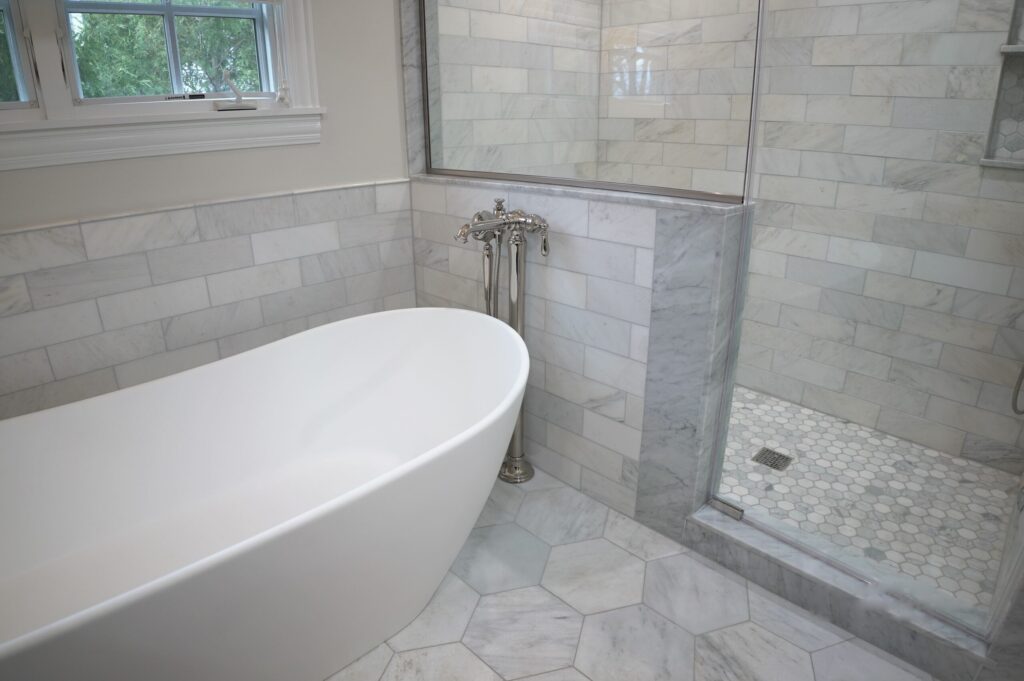
Bathrooms, kitchens and entries, where the substrate matters more than the tile.
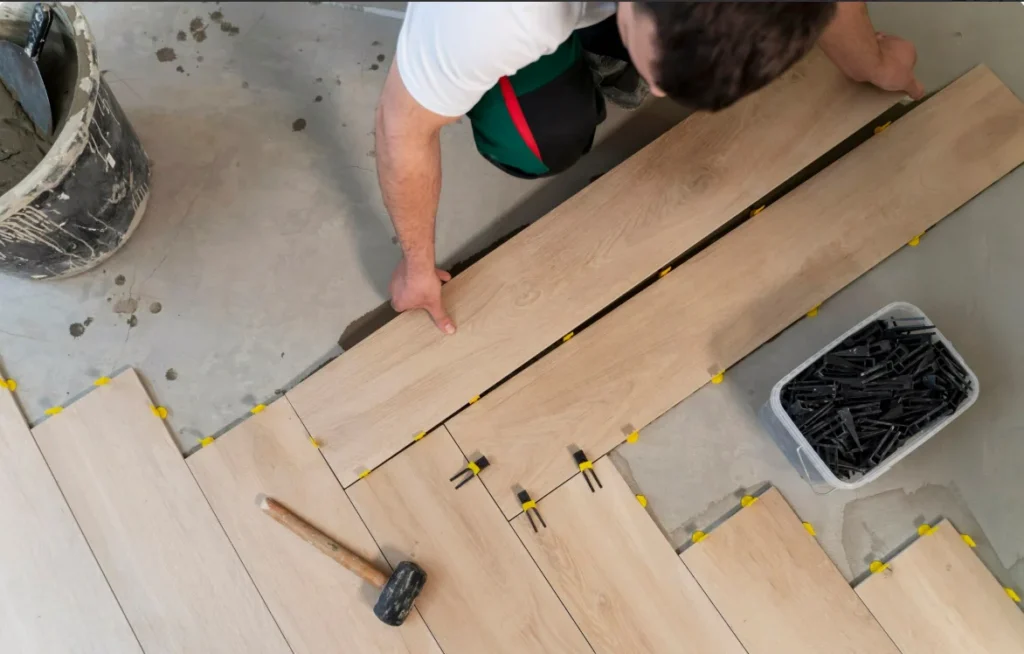
- Backer board and waterproofing before a tile is set.
- Large-format and stone laid on a substrate flat enough to carry it.
- Heated floors set in where the room is being taken up anyway.
- Grout and movement joints placed so the field does not crack in a line.
How a flooring job runs
- Lift a cornerWe open a section of the existing floor before quoting. What is underneath sets the price, and guessing it helps nobody.
- Measure and specifyRoom by room: material, direction, thresholds and where the transitions land. Waste is calculated on the pattern, not a flat percentage.
- Clear and protectFurniture out, routes covered, and containment set up for the dust that sanding and cutting make.
- Prepare the deckRepairs, levelling and underlay completed and checked flat before any finished material arrives in the room.
- Lay and finishBoards or tile set, then sanding, sealing or grouting, with drying time the schedule actually allows for.
- Trim and hand overScotia, thresholds and reinstated baseboards, then a walk through the whole floor in daylight before we clear the site.
Three ways people do this
Most flooring enquiries come down to one decision: keep what is there, cover it, or take it out.
-
Keep and refinishOriginal boards with thickness left in them. The cheapest route by a distance, and usually the best-looking one.→
-
Cover with a new surfaceLaminate or luxury vinyl over a prepared deck. Fast, hard-wearing, and the sensible answer below grade.→
-
Take it back to the joistsWhere the deck itself has failed. More work, but the only route that fixes bounce and squeak for good.→
Where we work
We take flooring projects across the north side and the northern suburbs.
Common Flooring Questions
How do I choose between hardwood, engineered, vinyl and laminate?
By the room and the subfloor, not by preference alone. Solid hardwood refinishes repeatedly but reacts to humidity. Engineered is more stable over concrete or below grade. Luxury vinyl plank is fully waterproof. Laminate suits dry living areas. We match the material to where it is going.
Can my existing floors be saved?
More often than people expect. Old growth hardwood in Chicago buildings is frequently better material than what would replace it, and refinishing costs less than replacement. What decides it is the wear layer left above the tongue, which we check before recommending either route.
Does the subfloor need attention first?
Sometimes, and it is far better to know before than during. Dips, flex and squeaks telegraph straight through any new floor, and large-format tile and click-lock planks are the least forgiving of all. We assess flatness and condition before quoting the finish.
Can flooring be done room by room?
Yes, and it is how most occupied homes handle it. We phase the work, protect the areas not in progress and keep access routes clear. Site-finished floors have cure periods that limit access temporarily, and we schedule those around your household.
What about sound requirements in a condo building?
Many associations set a minimum acoustic rating for hard flooring, and the underlayment is what delivers it. It is worth checking the building's rules before choosing a product rather than after it has been ordered.
How long before furniture can go back?
Longer than you can walk on it. Site-finished floors keep hardening after they are dry to the touch, and putting rugs or heavy furniture down early is the most common way a good floor is spoiled. We give real dates for the system used.