
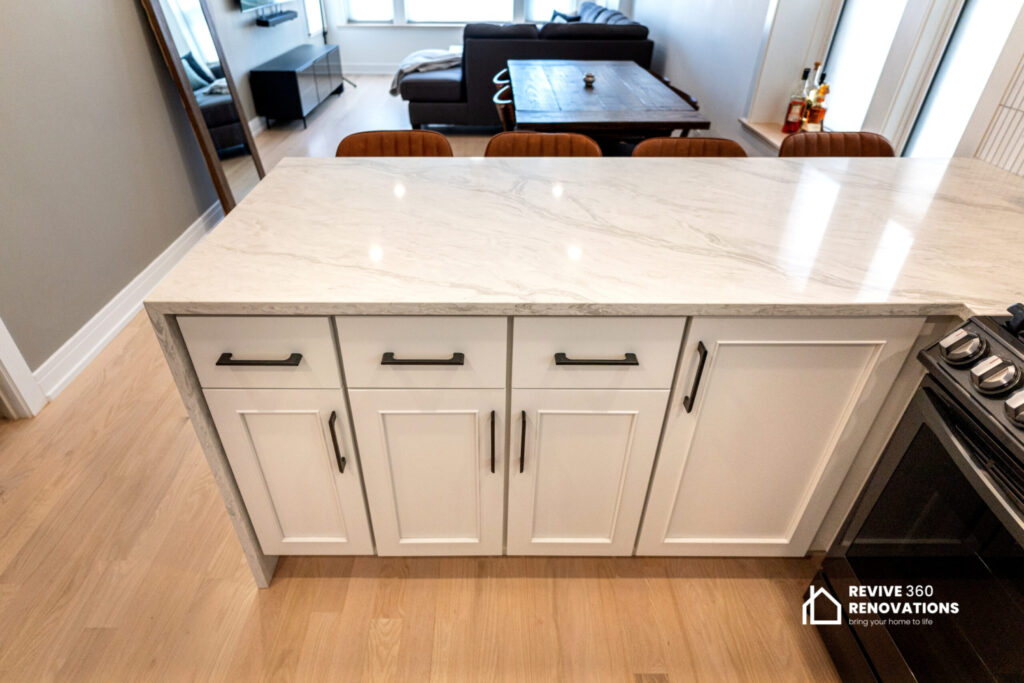
Selecting the right kitchen or bathroom countertop is one of the most critical decisions in a residential renovation. Countertops must endure daily heavy use while driving the overall visual aesthetic of your space. Quartz and granite remain two of the most popular surface materials on the market, yet they differ significantly in composition, durability, long-term maintenance, and performance under heat. While granite is a 100% natural stone extracted directly from earth quarries, quartz is an engineered stone surfacing material made from crushed natural quartz bound with polymer resins. Understanding the physical properties and functional trade-offs between engineered quartz and natural granite allows homeowners to choose a surface tailored to their daily lifestyle, design preferences, and long-term project budget.
Key Takeaways
- Material Composition: Granite is 100% natural, quarried stone with one-of-a-kind patterns. Quartz is an engineered product combining natural stone minerals with resin binders.
- Porosity and Sealing: Granite is a porous surface that requires periodic sealing to resist staining. Quartz is inherently non-porous and never requires sealants.
- Heat Tolerance: Granite features natural heat resistance and withstands hot cookware. Quartz contains resin that can scorch or discolor under direct, extreme heat.
- Design Uniformity: Quartz offers predictable pattern consistency across slabs. Granite displays natural color variations, dramatic veining, and unique structural mineral shifts.
- Maintenance Profile: Quartz provides zero-sealant daily ease. Granite requires routine pH-neutral cleaning and regular surface sealing.
Material Composition and Manufacturing Differences
The core distinction between these two high-performing surfacing options lies in how they originate and are manufactured.
Natural Granite Slabs
Granite forms deep within the Earth’s crust under immense heat and pressure over millions of years. Blocks of stone are quarried, sliced into solid slabs, and polished for installation. Because granite is entirely natural, no two slabs are identical. According to geology and materials resource data from the U.S. Geological Survey (USGS), natural stone composition varies depending on local mineral content, yielding natural movement, speckling, and unique color shifts.
Engineered Quartz Surfaces
Quartz countertops consist of roughly 90% to 93% ground quartz crystals mixed with 7% to 10% polymer resin binders and color pigments. The slurry is compacted under high pressure and heat to form dense, solid slabs. This controlled manufacturing process creates a uniform surface that mimics natural marble, concrete, or granite while eliminating interior structural fissures.
Durability, Heat Resistance, and Daily Performance
Evaluating how each material responds to heavy kitchen usage is key to long-term satisfaction.
| Performance Metric | Natural Granite | Engineered Quartz |
| Porosity | Porous (Requires sealing) | Non-porous (Zero sealing) |
| Heat Resistance | High (Handles hot pans directly) | Moderate (Requires trivets/pads) |
| Scratch Resistance | Excellent | High |
| Stain Resistance | High when sealed properly | Exceptional (Resists oils & acids) |
| Maintenance Need | Annual sealing required | Simple soap and water cleanup |
Heat Exposure Factors
Granite naturally withstands high thermal temperatures, making it a favorite for avid home cooks who place hot pans near cooktops. Conversely, the resins in quartz surfaces can suffer thermal shock or permanent resin burn if exposed to pans exceeding 300°F. Always use trivets or hot pads on quartz surfaces.
Stain and Scratch Defenses
Unsealed granite can absorb acidic liquids, coffee, or cooking oils, leading to deep stains. Proper sealant application keeps liquids on the surface. Quartz is completely non-porous, meaning acidic foods like lemon juice or red wine will not penetrate or etch the surface. According to food safety standards outlined by the U.S. Food and Drug Administration (FDA), non-porous surfaces like engineered quartz help restrict bacterial growth, making them an ultra-hygienic choice for food preparation.
Maintenance, Long-Term Care, and Aesthetics
The aesthetic choice between quartz and granite often depends on whether you prefer natural unpredictability or engineered consistency.
Natural Character vs. Pattern Uniformity
Granite showcases depth, natural movement, and unique mineral inclusions that make every kitchen one-of-a-kind. Quartz offers slab-to-slab pattern consistency, making it easier to hide seams during large installation layouts, such as waterfall island edges or full-height wall backsplashes.
Upkeep Requirements
- Granite Maintenance: Wipe daily with warm water and a mild, non-acidic detergent. Apply a penetrative stone sealer annually (or when water drops no longer bead up on the surface) to prevent fluid absorption.
- Quartz Maintenance: Requires no sealers, waxes, or special polishing compounds. Clean daily with standard mild dish soap and a soft microfiber cloth. Avoid harsh abrasive sponges or high-pH chemical strippers.
Selecting the ideal countertop requires balancing your family’s daily cooking habits, maintenance expectations, and design aesthetic. For expert material sourcing, full kitchen planning, and professional installation, working with trusted general contractors ensures seamless execution. Revive 360 Renovation provides complete kitchen remodeling, custom millwork, and premium surface installations designed to elevate your home’s functionality and long-term property value.
Frequently Asked Questions
Which is more expensive, quartz or granite?
Entry-level granite and standard quartz fall within similar price ranges. However, high-end exotic granites or custom marble-look quartz options can increase costs based on slab rarity, edge detailing, and installation complexity.
Does quartz scratch easier than granite?
Both quartz and granite rank high on the Mohs hardness scale and resist everyday scratching. However, you should always use cutting boards on both surfaces to avoid dulling kitchen knives or damaging the finish.
Can quartz be installed outdoors?
No. Standard quartz surfaces are not recommended for outdoor installations because prolonged exposure to ultraviolet (UV) sunlight can degrade the binding resins, causing discoloration, yellowing, or surface fading. Granite performs much better outdoors.
How often does granite need to be sealed?
Most standard granite countertops require sealing once a year. Denser dark granites may go two to three years between sealings, whereas lighter, highly porous granites may require more frequent applications.
Are seams visible on quartz and granite countertops?
Seams are necessary on large countertop spans for both materials. However, because quartz patterns are uniform and engineered, seams are typically easier to conceal on quartz than on granite with sweeping, organic veining.
Ready to upgrade your kitchen or bathroom surfaces with expert craftsmanship? Contact Revive 360 Renovation today to consult with our design specialists and schedule your custom countertop remodeling consultation.