
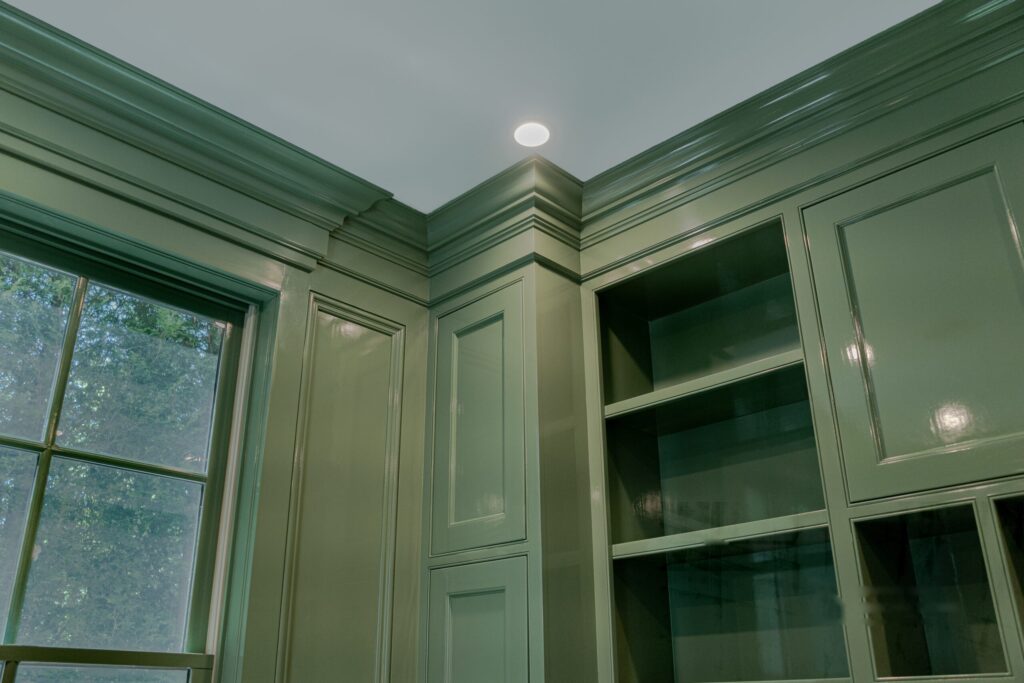
You have two paint chips taped to the living room wall, one color you love and one you are not sure you can live with. The question is whether to commit the whole room or give that bold shade a single wall to itself. Accent walls have been called dated and timeless in roughly equal measure, and the honest answer sits somewhere in between. An accent wall is a tool, and it works when the room gives it a reason to exist. This guide gives you a straight answer first, then a way to decide wall by wall, plus the alternatives that sometimes look better than one painted wall.
The Short Answer: When an Accent Wall Works
An accent wall works when the wall is already the natural focal point of the room, and the color relates to everything around it. It fails when you pick it at random, usually because it’s the only wall without a window or because one bold wall feels safer than committing to a whole room.
A good accent wall has an architectural reason. It is the wall a bed backs onto, the wall a fireplace sits in, or the wall you face when you walk in. A poor one splits a long wall in half or highlights a wall with a thermostat, three outlets, and a door on it. If you cannot explain in one sentence why this wall and not another, pause before buying paint.
Does Your Room Have a Natural Focal Wall?
Start with the architecture, because it decides more than color theory does.
The bed wall is the most dependable candidate in a bedroom. The headboard already anchors it; nothing competes with it, and you rarely stare straight at it, so a deeper color feels enveloping rather than loud.
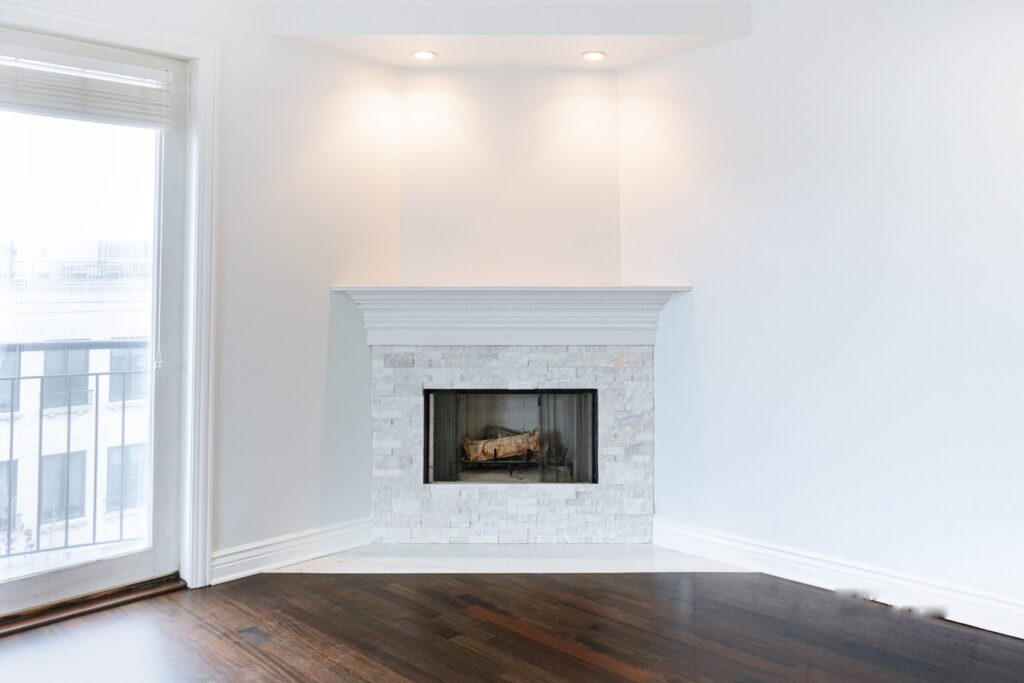
A fireplace wall is the second strongest case. In Chicago greystones and vintage condos, the fireplace is often the one original feature a room has, and a richer color can frame the mantel. On our Miller St. kitchen, fireplace, and flooring renovation in University Village, we specified the fireplace surround, kitchen, and floor together because all three are visible from the same position in the room. That is a useful rule for color too: if two surfaces share a sightline, choose them as a pair.
A window wall is usually a poor choice, since dark paint around bright glass makes the eye jump to the glare instead of the view. An entry wall is hit or miss. If it is mostly blank, it can carry color well, but if doors, closets and radiators interrupt it, the paint just highlights the clutter.
Light, Orientation and the Chicago Winter Factor
The same paint changes character throughout the day and seasons. As a general rule of thumb, north-facing rooms get cooler, steadier light, so colors tend to read a little cooler and flatter there. South-facing rooms get warmer, brighter light, and colors tend to look livelier. East and west rooms swing from morning to evening, so a color can look quite different at 8 a.m. and at 6 p.m.
Chicago adds a layer of its own. From November through March, gray overcast skies dominate, and a wall that glowed in August can look muddy in January. Neighboring buildings on narrow city lots also cut daylight from rooms facing a gangway.
The practical fix is to test rather than guess. Paint a large sample on the actual wall, and look at it in morning light, in the afternoon, under your evening lamps and again on a gray day. A color that holds up in all of those is worth committing to.
Color Relationships, Undertones and Sheen
Undertones cause more accent wall regret than bold choices do. Every color leans a little warm or cool, and when the accent leans the opposite way from your trim, flooring or sofa, the room looks off even if you cannot say why.
- Match temperature first. A warm clay looks right beside warm white trim and oak floors, while slate blue or deep green sits better with cooler whites and gray-toned wood.
- Pull the accent from something already in the room, such as a rug, a piece of art or the veining in a stone surface.
- Keep the neighboring walls quiet, in a neutral that shares the same undertone family.
- Go a few steps deeper than the main wall color. A pale accent in an otherwise white room barely registers.
Sheen matters as much as color. Flat and matte finishes absorb light and hide minor flaws, which suits a feature wall in an older plaster home. Eggshell and satin wipe clean more easily, which suits hallways and kids’ rooms. Gloss on a full wall emphasizes every ripple in the surface. Keep the accent and adjoining walls in the same sheen unless you have a specific design reason, because two sheens in one corner can read as a mistake.
Alternatives to a Single Painted Wall
A painted accent wall is the cheapest and fastest way to add emphasis, but not always the best one. Here is how the main options compare, in relative terms.
| Option | Visual effect | Relative cost and effort | Watch out for |
|---|---|---|---|
| Painted accent wall | Clean, simple contrast | Lowest | Looks arbitrary if the wall is not a real focal point |
| Paneling or wainscoting | Depth, shadow, traditional or modern character | Higher, more carpentry | Needs careful layout and caulking before painting |
| Wallpaper | Pattern and personality | Moderate to high | Removal later; wall condition matters |
| Limewash or plaster finish | Soft, cloudy, layered depth | Moderate to high | Skilled application; hard to touch up |
| Two-tone wall | Gentle division of the room | Low to moderate | Needs a straight, deliberate dividing line |
| Color drenching (walls, trim and ceiling in one color) | Immersive, cohesive | Moderate, more surface area | Needs a color you like in every light |
Color drenching is worth a look if you want a dark color but fear it will shrink the room. A small room often feels more finished when trim and walls match, because no contrasting lines show where the walls stop. Paneling suits many Chicago homes, where picture rails, tall baseboards and plaster walls already set the stage.
Open Plans, Small Rooms, Rentals and Condos
In an open-plan space, an accent wall can mark off the dining area from the living area, but it needs a clear endpoint such as an inside corner. Paint that stops partway across a flat wall rarely looks intentional. In a small room, a deep color on the far wall adds depth, while the wall nearest the door can make the room feel closed in.
If you rent, check your lease first, since many require you to repaint to the original color before move-out. Peel-and-stick wallpaper or a large piece of art may meet the same goal with less risk. Condo owners should confirm association rules on work hours and protection of shared hallways and elevators before a crew arrives.
Prep and Clean Cut-In Lines
A bold color is much less forgiving of poor prep than a pale one. A deep accent over patched plaster shows every patch, and a wobbly edge at the ceiling is more visible when contrast is high. Fill and sand imperfections, spot-prime repairs to even out the sheen, and use a tinted primer under deep colors. Cut in with a good angled brush, let the adjacent wall dry fully before taping, press the tape down firmly, and pull it while the paint is still slightly soft.
Our guide to preparing your walls for fresh paint covers the prep steps in more detail. If your home was built before 1978, the EPA’s Renovation, Repair and Painting Program requires firms paid to disturb paint in those homes to hold lead-safe certification, so ask any painter about it. Ventilate well while painting too, since the EPA notes that paints release volatile organic compounds during use.
Resale and Neutral-Ability
A single accent wall is one of the easier decisions to reverse. If you plan to sell in the next few years, repainting one wall is a small job compared with painting the whole house. Very saturated colors can distract in listing photos, so a mid-tone or a softened version of your favorite is a safer compromise. If other rooms need refreshing too, a professional painting crew can do it in one visit. On our Granville St. kitchen renovation in Edgewater, painting the complete unit alongside the kitchen meant one set-up, one protection phase and one clean-down.
Common Mistakes to Avoid
- Choosing the wall with the most interruptions, so the color looks patchy.
- Picking a color from a tiny chip and never testing it in your own light.
- Ignoring the undertones in trim, flooring and furniture.
- Painting a deep color over poor prep, which makes every flaw louder.
- Using an accent wall to fix a room with no focal point when the real problem is furniture layout or lighting.
- Adding accent walls to every room, which defeats the idea of an accent.
Frequently Asked Questions
Are accent walls out of style?
Not entirely. The random colored wall in a rental living room has fallen out of favor, but a considered feature wall behind a bed or around a fireplace still looks current. Many designers now favor full-room color, paneling and textured finishes instead.
Which wall should I paint as the accent wall?
Choose the wall your eye lands on first or that already holds an anchor, such as the bed, fireplace or a built-in. Avoid walls broken up by many openings, and the wall holding the main light source.
Should an accent wall be darker or lighter than the other walls?
Either can work, but darker is more common because the contrast is easier to see. The accent should still share an undertone with the neighboring walls so the room feels cohesive.
Can I do an accent wall in a small room?
Yes, with care. A deeper color on the far wall can add depth, and a color-drenched room can look polished and intentional. Test samples first, since small spaces show color shifts quickly.
Does an accent wall hurt resale value?
It usually does not, since repainting one wall is a small job. Very saturated colors can be less appealing in listing photos, so consider softening or repainting before you sell.
Conclusion
An accent wall is worth it when the wall has a job to do, such as anchoring a bed, framing a fireplace or welcoming you at the entry. When it does not, paneling, limewash, a two-tone treatment, or a color-drenched room will likely give you the effect you want with less risk. Test in your own light, match undertones, and focus on prep, because that is where deep colors succeed or fail. If you would like a second opinion on a wall, a palette or a larger refresh, you can talk with the Revive 360 team, and we will look at the room with you.