

You tiptoe to the kitchen at six in the morning, and the same board by the hallway announces you anyway. If that sounds familiar, you are probably wondering two things: can squeaky hardwood floors be fixed without tearing anything up, and is the noise telling you something worse is going on underneath? In most Chicago homes the noise is mechanical and fixable, but it is also an early warning worth understanding before you reach for a hammer.
This guide covers why wood floors squeak, how heating-season dryness and humid summers make it worse, how to tell a harmless squeak from a structural one, which fixes work from above and from below, and when refinishing, repair or a professional visit is the smarter move.
Why Hardwood Floors Squeak
A squeak is friction. Two surfaces that once sat snugly together, such as a board and a nail, a board and the subfloor, or a subfloor panel and a joist, now move against each other under your weight.
Gaps between the flooring, subfloor and joists
Hardwood is fastened to a subfloor, and the subfloor is fastened to joists. If a gap opens at either connection, the layer above flexes into it every time someone steps there. APA, the engineered wood association, lists causes in its technical note on floor squeaks ranging from wet or green lumber and improperly driven nails to joist hangers, ductwork and noisy tongue-and-groove joints, and it stresses that each case needs a careful look to find the real source.
Loose or backed-out fasteners
Nails lose their grip as wood cycles through moisture changes, and a board that can rock slightly on a nail head chirps with every step. This is among the most common squeaks and usually one of the easiest to cure.
Seasonal movement from humidity
Wood takes on moisture in humid air and gives it up in dry air, and every cycle nudges boards and fasteners a little. Our summers are muggy, then the furnace comes on and indoor air turns very dry, so the boards shrink just as the fasteners have been loosened by a season of swelling. That is why the same floor that was quiet in August starts talking in January. The National Wood Flooring Association treats 30 to 50 percent relative humidity and 60 to 80 degrees Fahrenheit as the typical conditions for solid wood floors in its installation guidelines, though it notes that geographic exceptions and manufacturer instructions can differ.
Are Squeaky Hardwood Floors Cosmetic or a Warning Sign?
If the squeak is limited to a few spots, has stayed the same for months, and doesn’t involve any bounce, it is almost certainly a cosmetic nuisance. If the squeak comes with movement you can feel or see, it’s a different matter.
Watch for these signs that the problem goes deeper than a loose board:
- The floor bounces, feels spongy, or visibly dips when you cross it.
- Squeaking has spread across a room in a single season.
- Nearby doors and windows have started to stick, or new cracks have appeared in plaster or drywall.
- Boards in one area are cupped, stained, or darkened, which points to moisture rather than movement.
- Squeaks return within weeks after you have fixed them.
Several of those together suggest a weak subfloor, damaged joist, or water problem, and noise is no longer the main issue. Our posts on how to know when hardwood floors need repair, and the signs your subfloor needs repair, go through those warning signs in detail. In a vintage Chicago building, where the framing may be a century old, we would rather look than guess.
How to Find the Squeak Before You Fix It
Walk the area slowly and mark every spot that speaks with painter’s tape, then work out whether the sound is board on board, board on nail, or subfloor on joist, because the fix depends on which. If you have an unfinished basement or accessible crawlspace, have a helper walk above while you watch and listen below.
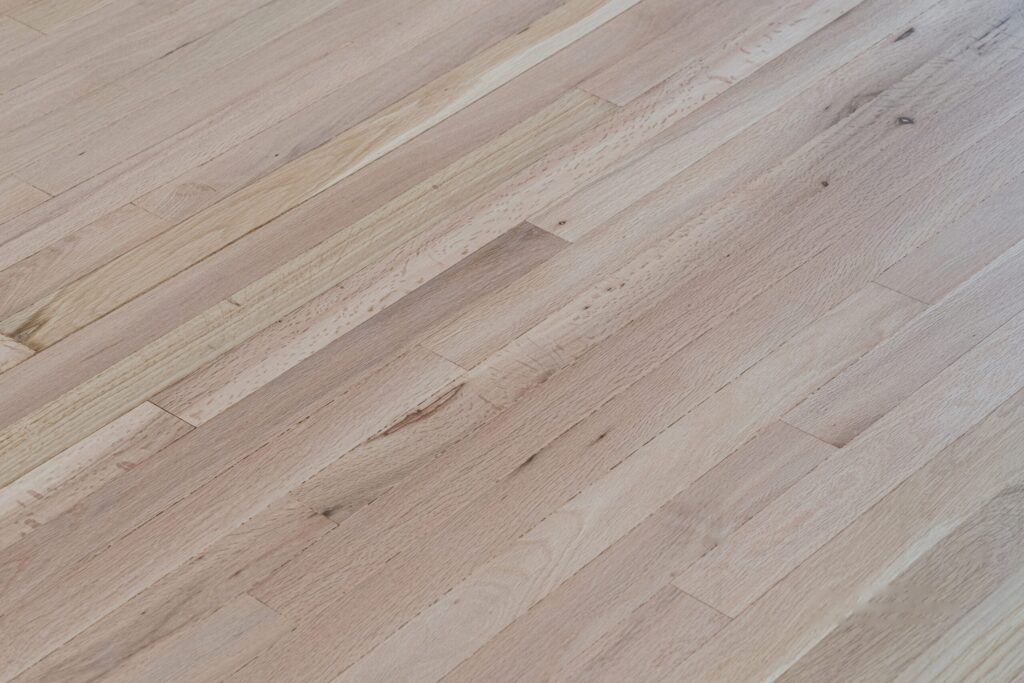
Before driving a single screw, find out what is under the floor. The NWFA guidelines say screws are a common way to quiet a noisy floor, but they warn you to be mindful of what lies beneath the subfloor before driving them. Radiant tubing, plumbing, and wiring are all good reasons to confirm joist locations first.
Fixing Squeaks from Above
If the area above is hardwood and you cannot get below, a top-side repair is a practical first attempt. Yes, you can quiet most isolated squeaks without removing a board, as long as the fastener finds a joist.
- Lubricant in the seam. Talcum or graphite powder worked between boards can quiet board-on-board rubbing. It does nothing for a board that is loose on its fasteners.
- Trim-head screws. Drill a pilot hole, drive a countersunk screw through the board and subfloor into the joist, and fill the hole with color-matched putty. Squeak-repair kits use a breakaway screw that snaps off below the surface, which keeps the repair neat.
Whatever you use, the fastener has to reach solid framing, and it must not be so long that it pokes through or hits something hidden.
Fixing Squeaks from Below
If you can reach the underside, below-floor repairs close the actual gap and leave the finished surface untouched. Glue-coated shims tapped gently into the space between a joist and the subfloor are the classic answer, and a screw driven up from below through the subfloor, short enough that it stays out of the finished boards, can pull a loose panel tight. Blocking or a cleat beside the joist adds support where the framing itself flexes.
This is where Chicago housing matters. In a single-family bungalow or two-flat with a basement, working from below is straightforward. In a condo or upper-floor unit, the ceiling below belongs to a neighbor, so top-side fixes are usually the only practical option, and building rules on work hours can apply. Check your association’s rules first.
Comparing Squeak Fixes
| Method | Best for | Access needed | Relative cost and effort | Main limitation |
|---|---|---|---|---|
| Talc or graphite powder | Board-on-board rubbing | Top only | Very low | Does not help loose fasteners |
| Trim-head or breakaway screws | A loose board over a joist | Top only | Low | Must hit a joist; visible putty spot |
| Glue-coated shims | Gaps between joist and subfloor | Below | Low to moderate | Needs basement or crawlspace |
| Screws from below | Loose subfloor panels | Below | Low to moderate | Screw length must be exact |
| Blocking, cleats or joist sistering | Flexing framing | Below | Moderate to high | Often needs a carpenter |
| Subfloor repair or replacement | Damaged or delaminated subfloor | Floor lifted | High | Disruptive, but the lasting fix |
Will Refinishing or Replacing the Floor Stop the Squeaks?
No. Refinishing treats the wood surface, not what is fastening it down, so a squeaky floor will usually squeak after the new finish is dry. The reverse order is smarter: fix the squeaks first, then sand and finish. If you are already planning a refresh, our step-by-step guide to hardwood floor refinishing explains what the process involves, and it is a natural time to have loose boards checked before the sander arrives.
The same logic applies to bigger projects. When a floor is being renewed alongside a kitchen, as in our Marshfield St. kitchen and flooring renovation in Lakeview, the flooring and cabinetry run as a single scope, which is a good moment to deal with any loose fastening or flatness problem directly rather than work around it.
When to Call a Professional
Bring in a flooring professional if the squeak is widespread, if the floor moves visibly, if fixes keep failing, or if you suspect moisture.
When comparing contractors, ask whether they will check the subfloor and framing rather than only the visible boards, how they will locate joists and avoid hidden systems, what they will do about the finish where screws go in, and whether the quote separates squeak repair from any subfloor or leveling work. In a condo, ask how they handle building rules on noise, hours and protecting common areas. Cost depends mostly on access, how large the area is, whether the subfloor is sound, and how much finish has to be matched afterward.
Preventing Squeaks with Humidity Control
The best prevention is steady indoor humidity. The EPA’s guide to mold, moisture and your home advises keeping indoor humidity below 60 percent and ideally between 30 and 50 percent, and says to use a humidity meter, air conditioners and dehumidifiers when needed.
In practice, put an inexpensive hygrometer in the main living area and look at it in January, when forced-air heat dries the house, and again during a July heat wave. Add a humidifier in winter if readings fall below the range your flooring manufacturer recommends, and run air conditioning or a dehumidifier in summer. Fixing small loose boards promptly keeps little squeaks from becoming habits.
Frequently Asked Questions
Why do my floors squeak more in winter?
Heating dries the indoor air, and wood loses moisture and shrinks slightly, which can open small gaps around fasteners that were tight in summer. Many floors quiet down again once humidity rises in spring, though the gaps may not close completely.
Can I fix squeaky hardwood floors without pulling up the boards?
Usually, yes. Powder in the seams, trim-head screws into a joist, or repairs from a basement or crawlspace can resolve a single squeak without removing flooring. A repair that has to be repeated is a hint that something under the floor needs a proper look.
Is a squeaky floor dangerous?
On its own, no. A squeak is friction, not a hazard. The concern is what accompanies it: bounce, sagging, cupping, stains or sticking doors can point to subfloor or moisture trouble that needs attention.
Does fixing the squeak damage the finish?
A screw or nail leaves a small mark that you can fill and touch up, and a good repair is hard to see. Squeak kits are designed to leave a clean surface, though matching an aged, worn finish perfectly is never guaranteed.
Should I fix squeaks before refinishing?
Yes. Sanding and finishing hide nothing about what is fastening the boards down, and the floor is easier to repair before a fresh coat goes on. Tell your refinisher about every spot you have marked.
Conclusion
Squeaky hardwood floors are usually a mechanical problem: loose fasteners, small gaps and seasonal wood movement, all made more noticeable by Chicago’s swing from dry winters to humid summers. Find the exact spot, make sure the fix reaches a joist, correct the problem from below where you can, and keep indoor humidity steady. If the floor bounces, sags, or keeps squeaking after repairs, treat that as information about the subfloor rather than a nuisance.
If you would like a second opinion before you decide between a repair and something larger, tell us what you are hearing and where through our flooring services page, and we will tell you plainly whether it is a ten-minute fix or a conversation about the subfloor.